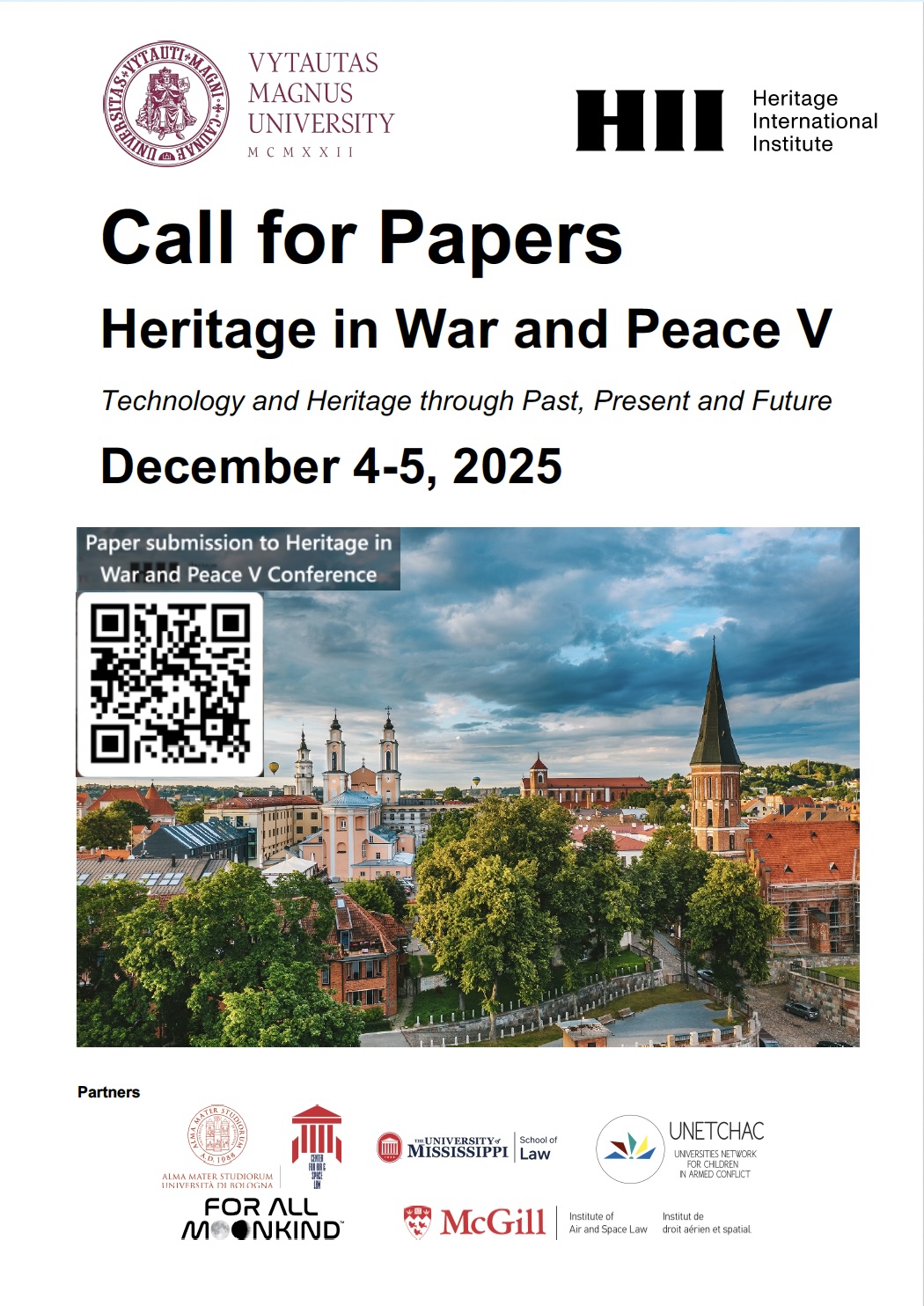
Call for Papers. Heritage in War and Peace V: Technology and Heritage through Past, Present and Future
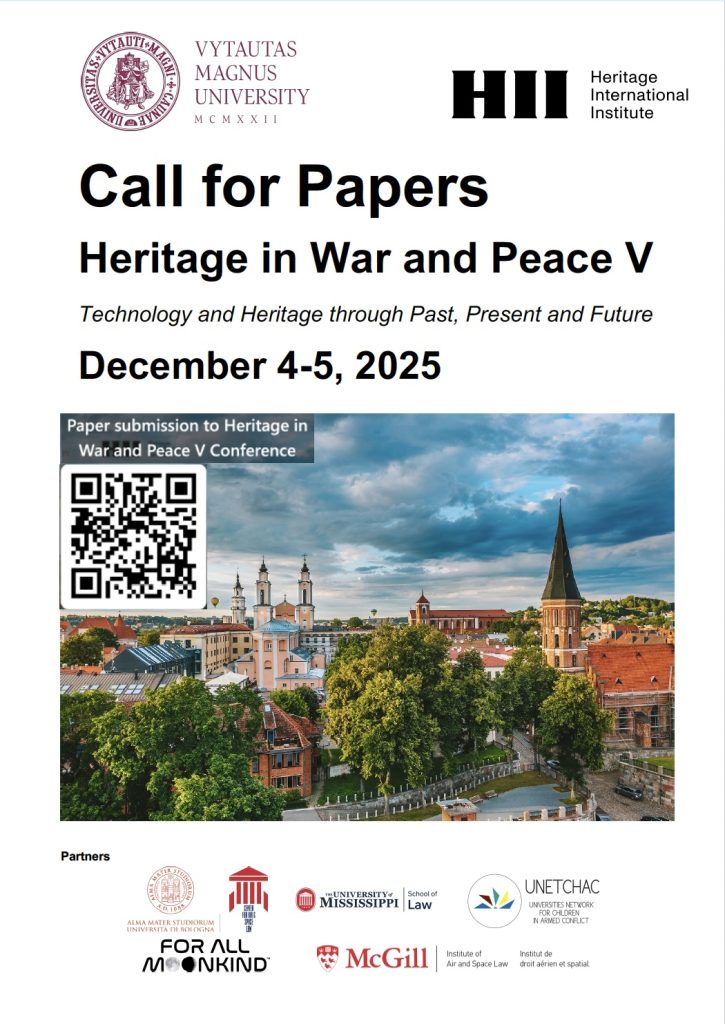
Vytautas Magnus University Faculty of Law, Department of Public Communication, and Vytautas Kavolis Transdisciplinary Research Institute and Heritage International Institute (HII), in partnership with the University of Roma Tre (TBC), the McGill University’s Institute of Air and Space Law (IASL), the University of Mississippi, ‘For All Moonkind’, the Universities Network for Children in Armed Conflict (UNETCHAC) and One Ocean Hub kindly invite you for the fifth edition of the International Conference ‘Heritage in War and Peace’.
What is the International Conference on Cultural Heritage ‘Heritage in War and Peace’?
The annual Conference gathers leading global experts on heritage, from all regions of the world, with the aim of developing innovative approaches to heritage and direct dialogue among all the relevant stakeholders.
The event aims at looking in greater depth at the very notion of cultural and natural heritage, proposing to focus on diverse aspects of heritage protection in conflict and peace, conceptualize more critically the notion of tangibility and intangibility, address all kind of heritage issues – such as conflict-related heritage destruction, digital transformation, and climate threats – and put forward innovative ways to deal with heritage preservation and management.
In line with Heritage International Institute mission, the Conference wants to contribute to guarantee peace and international security, human rights and sustainable development, by exploring innovative approaches and promoting policy responses for a more effective protection of heritage, all over the world and under every circumstance, both in time of war and peace.
The objective is also to build cultural bridges between countries and people, celebrating cultural diversity, and sharing knowledge and experiences, leading to a deeper and more enriching understanding of the cultural world around us.
Why ‘Heritage in War and Peace’?
Following the success of the first four editions organised at the Sapienza University in Rome (December 2021), McGill University in Montréal (November 2022), the University of Bologna (January 2024), and the University of Strathclyde (December 2024) as well as the successful publication of the monograph collecting selected conference papers, ‘Heritage in War and Peace. Legal and Political Perspectives for Future Protection’, the interdisciplinary conference is now coming to Kaunas, Lithuania for its next iteration.
What is the theme of this year’s edition?
As stated by UNESCO ‘Digital technologies have a profound impact on our lives, including the way we experience and access culture. As cultural practices and irreplaceable heritage of humanity face novel challenges such as climate change, unsustainable developments and growing tourism, innovations can offer solutions.
Digital and new technologies, including artificial intelligence, virtual reality, block chains, data networks, cloud computing, mobile applications, smart sensors, have become crucial for the creation, preservation and transmission of knowledge. Within this evolving technological ecosystem, which also raises unprecedented risks, cultural heritage finds itself at a crossroads.
On the one hand, digital and new technologies offer innovative advancements in documenting, preserving, accessing, and experiencing cultural heritage. Information Technology (IT) and Information and Communication Technology (ICT) could significantly contribute to safeguard and promote cultural sites, including the World Heritage ones, and intangible heritage, with a view to transmitting them to future generations. New technologies enable the creation of immersive and interactive experiences, such as virtual museums, that enhance public engagement, community participation and education and facilitate remote access to collections and sites. Such technologies also allow monitoring of environmental threats and detecting of illicit trafficking of cultural objects.
On the other hand, such technologies present multifaceted challenges to heritage, including those related to digitization processes, digital obsolescence, accessibility, copyright and ownership, sustainability, ethical use, digital divide, disparities in digital infrastructure. Moreover, cybersecurity is a crucial element that must be considered for ensuring the integrity, authenticity, and protection of digital heritage assets from tampering, loss, or malicious attacks – especially when heritage data is stored, shared, or accessed through online platforms and cloud-based systems. Immersive environments, such as the metaverse, raises also new questions about the authenticity and ethical curation of cultural content in virtual spaces, risking distorting historical narratives or prioritizing commercial over cultural values.
The situation is even more complex when it comes to armed conflicts, where cyber warfare, drones and autonomous weapon systems are often used to target and damage cultural sites. In post-conflict or post-disaster scenarios, digital reconstruction sparks intense debate: does virtual restoration risk replacing or devaluing the original, or can it serve as a powerful tool for memory, education, and community healing?
In the context of cyberwar, cultural heritage faces growing risks as digital repositories, archives, and databases can become deliberate targets of cyberattacks aimed at erasing cultural memory. Addressing these risks requires the strategic use of emerging technologies, not only to safeguard digital and digitized heritage, but also to ensure its long-term preservation, integrity, and accessibility for future generations.
Rapid technological advancements may also outpace existing laws and regulations, making it harder to legally protect cultural heritage. Building proposals for future strategies at the intersection of heritage and technology is more necessary than ever before, also considering the intricate relationship between geopolitical events and the role of digital strategies in safeguarding and showcasing cultural heritage globally.
That is why, this year’s edition is organised under the general theme of ‘Technology and Heritage through Past, Present and Future’. In line with their mission and their future-focus and interdisciplinary approach, Heritage International Institute and Vytautas Magnus University aim at identifying new measures and tools that use new technologies in favour of heritage, also raising awareness on the importance to fully guaranteeing cyber security.
Will all the panels have a technology focus?
Not necessarily. We invite all the participants to follow an integrated and comprehensive approach to heritage (archaeology, landscape, architecture, design, fashion, music, dance, theatre, cinema, photography, traditional sports and games, accessibility and inclusion strategies) with a possible special focus on new technology. In the belief that the benefits of heritage can only be fully realized through a truly inclusive vision, encourage consideration of the complex interconnections between the social, cultural, environmental, and economic dimensions of diverse cultures. This approach will offer unprecedented opportunities for the preservation of heritage as irreplaceable source of knowledge, growth, identity, while also opening the path for ground-breaking cultural services and possibilities.
What is the Virtual Museum on Cultural Heritage?
In the belief that digital language can be a fundamental tool for promoting the importance of human rights and cultural heritage, at the same time providing a further possibility of conservation, the event will also host the Virtual Museum on Cultural Heritage, promoted by the Italian Ministry of Foreign Affairs and International Cooperation together with the Italian Ministry of Culture. The Virtual Museum, officially recognized as a good practice in the Human Rights Council’s Resolution A/HRC/58/L.4/Rev.1, is the first initiative at a global level on such an important topic, offering an example of digital interpretative exegesis of cultural heritage that combine different digitisation models and clearly shows the advantages of digitisation in the cultural sector. The Virtual Museum also encourages access for all to cultural heritage in order to stimulate human rights, particularly cultural rights and contributes to enable older generations to approach the digital world and make cultural sites accessible to people with motor difficulties.
How will young researchers be supported?
Papers by young scholars and early career researchers will be considered by members of the academic committee for a selection of prizes (details will be provided at a later date).
How to submit a paper proposal?
We invite you to engage with the above-mentioned heritage-related themes by preparing a 250-word abstract by August 31, 2025 and submitting it through a dedicated form. This year once again we ask you to specify which session best fits your paper in your opinion when submitting the proposal. Please note that exploration of the intersections between heritage and technology are encouraged in all panels. The submissions will be considered on a rolling basis from June.
❖ Heritage and Emerging Digital Technologies – Special Session (co-chairs: Julija Kalpokienė & Ignas Kalpokas)
❖ Heritage and Digital Humanities – Special Session (co-chairs: Ignas Kalpokas & TBC)
❖ Heritage in War and Peace – General Session (co-chairs: Gianluigi Mastandrea Bonaviri & Mirosław M. Sadowski)
❖ Different Dimensions of Water and Heritage (chair: Gianfranco Nucera)
❖ Nature and Heritage (chair: Luca Cetara)
❖ Law, Culture and Politics in Heritage (chair: Mirosław M. Sadowski)
❖ Archaeology and Heritage (co-chairs: Gianluca Miniaci & Camilla Saler)
❖ Heritage, Human Rights and Vulnerable Groups (co-chairs: Laura Guercio & Andrea Sòcrati)
❖ Heritage, Restitution and Trafficking (co-chairs:): (co-chairs: Maria Font & Isabella Salsano)
❖ Heritage, History and Country Case Studies (co-chairs: Tania Atilano & Nora Weller)
❖ Outer Space Perspectives for Heritage (co-chairs: Michelle L. D. Hanlon & Andrea Harrington)
❖ International Humanitarian Law, International Criminal Law and Heritage (co-chairs: Ahmed Khalifa and Martin Faix)
❖ Heritage, Landscape and Architecture (co-chairs: Maria Teresa Idone, Giovanna Piccinno & Luca Cetara)
❖ Heritage, Design and Arts (co-chairs: Luca Fois, Giovanni Conti, Enrico Carrocci, Veronica Pradaelli & Giorgia Fiorio)
❖ Heritage, Tourism and Food (co-chairs: Gianluca Frinchillucci)
❖ Heritage and Digital Twins (chair: Davide Scalmani)
❖ Intellectual Property Rights and Cultural Heritage (co-chairs: Dominik Światkowski and Julija Kalpokienė)
❖ Special Roundtable* Heritage Law and Digital Preservation (co-chairs: Marie Sophie de Clippele & Mirosław M. Sadowski)
❖ Special Roundtable* Ceremonies and Rituals of Authority in Legal and Political Systems (co-chairs: Larry Catá Backer, Martin Belov & Mirosław M. Sadowski)
* Special Roundtables both have more detailed Calls for Papers (below).
What is the key information?
CfP deadline: August 31, 2025 (submissions considered on a rolling basis)
Abstract word limit: 250 words
Abstract submission form
Conference dates: December 4-5, 2025
Conference location: Vytautas Magnus University, Kaunas, Lithuania
Conference format: in-person (hybrid allowed only in specific circumstances)
Email contacts: ignas.kalpokas@vdu.lt; julija.kalpokiene@vdu.lt
Conference fee: TBC (the fee is unlikely to exceed EUR 100.00)
More information – Call for Papers Heritage in War and Peace V
Creativity in Academia: A Prize in Brussels for a Master’s Thesis
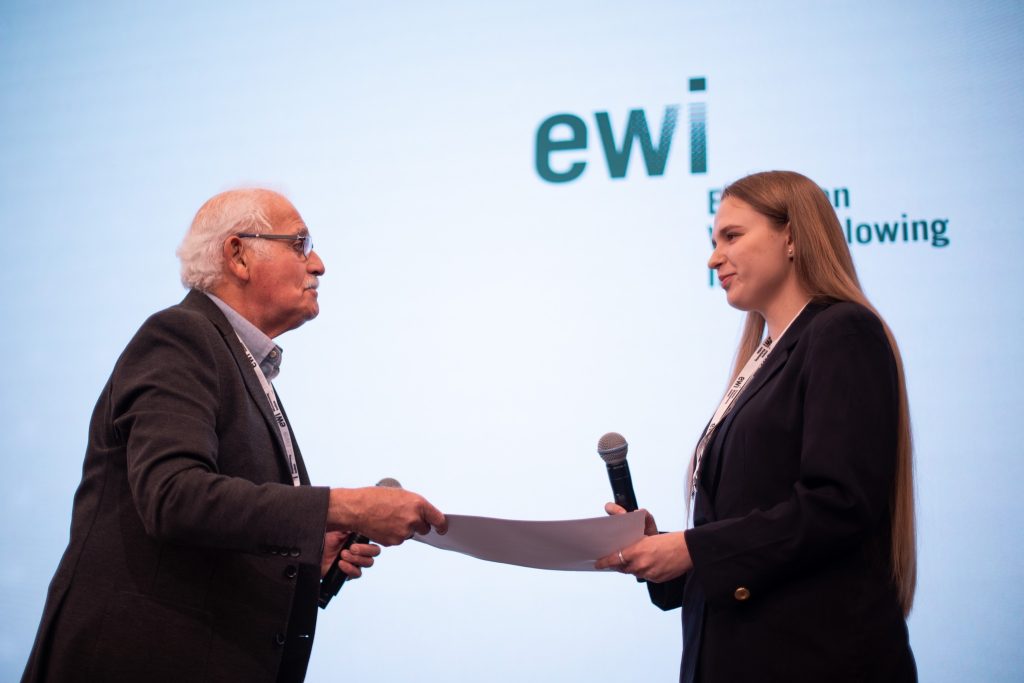
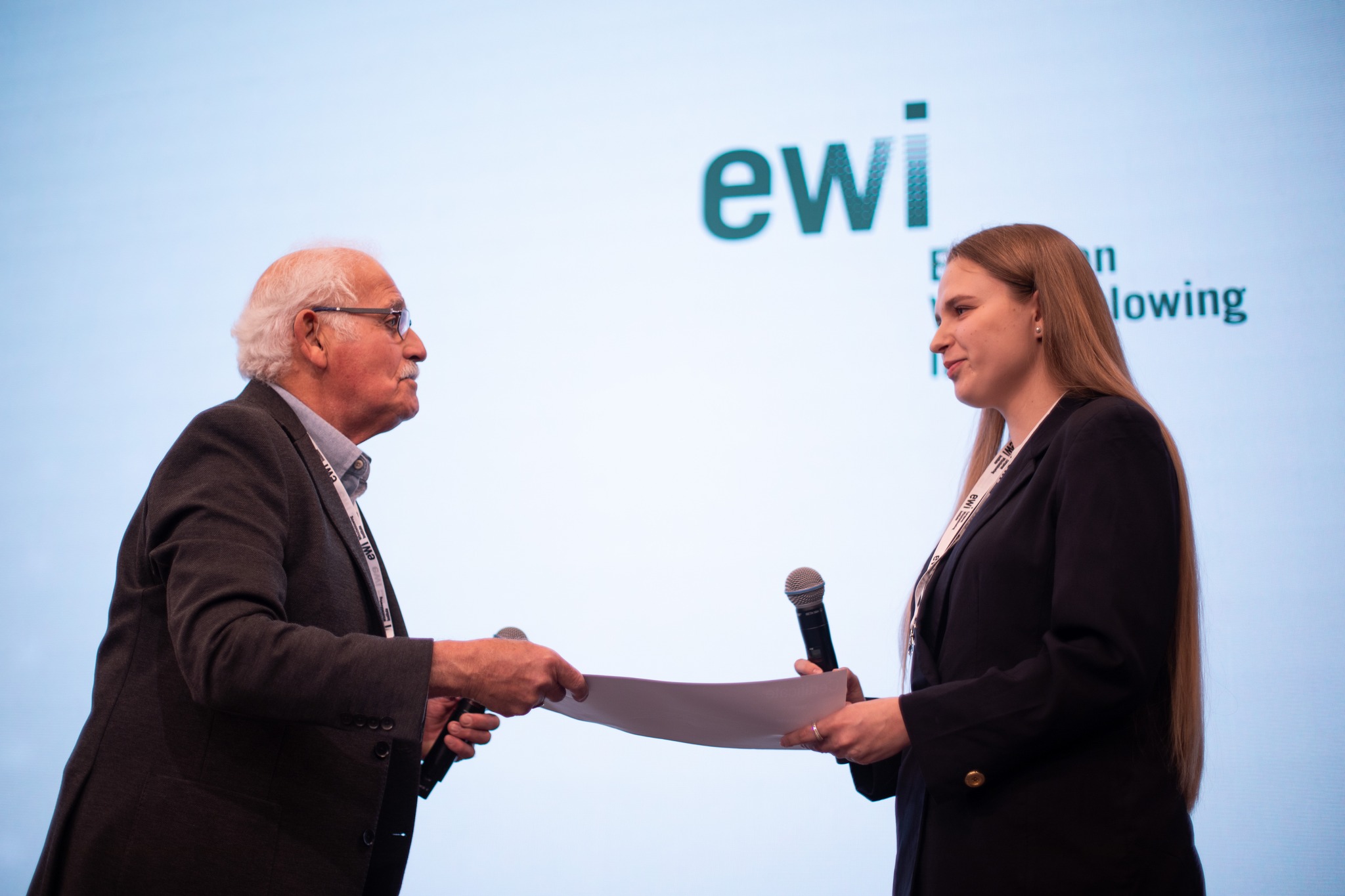
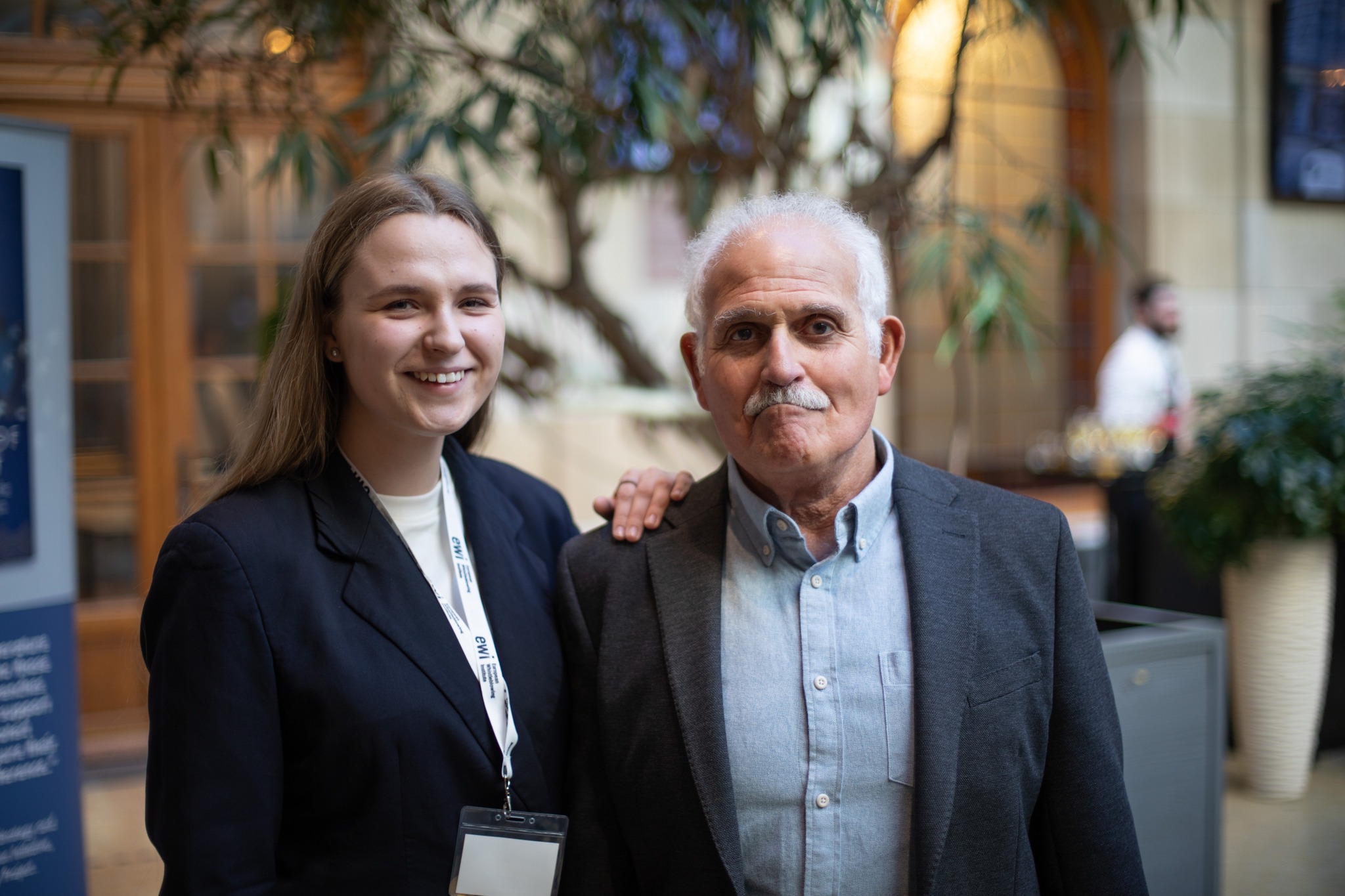
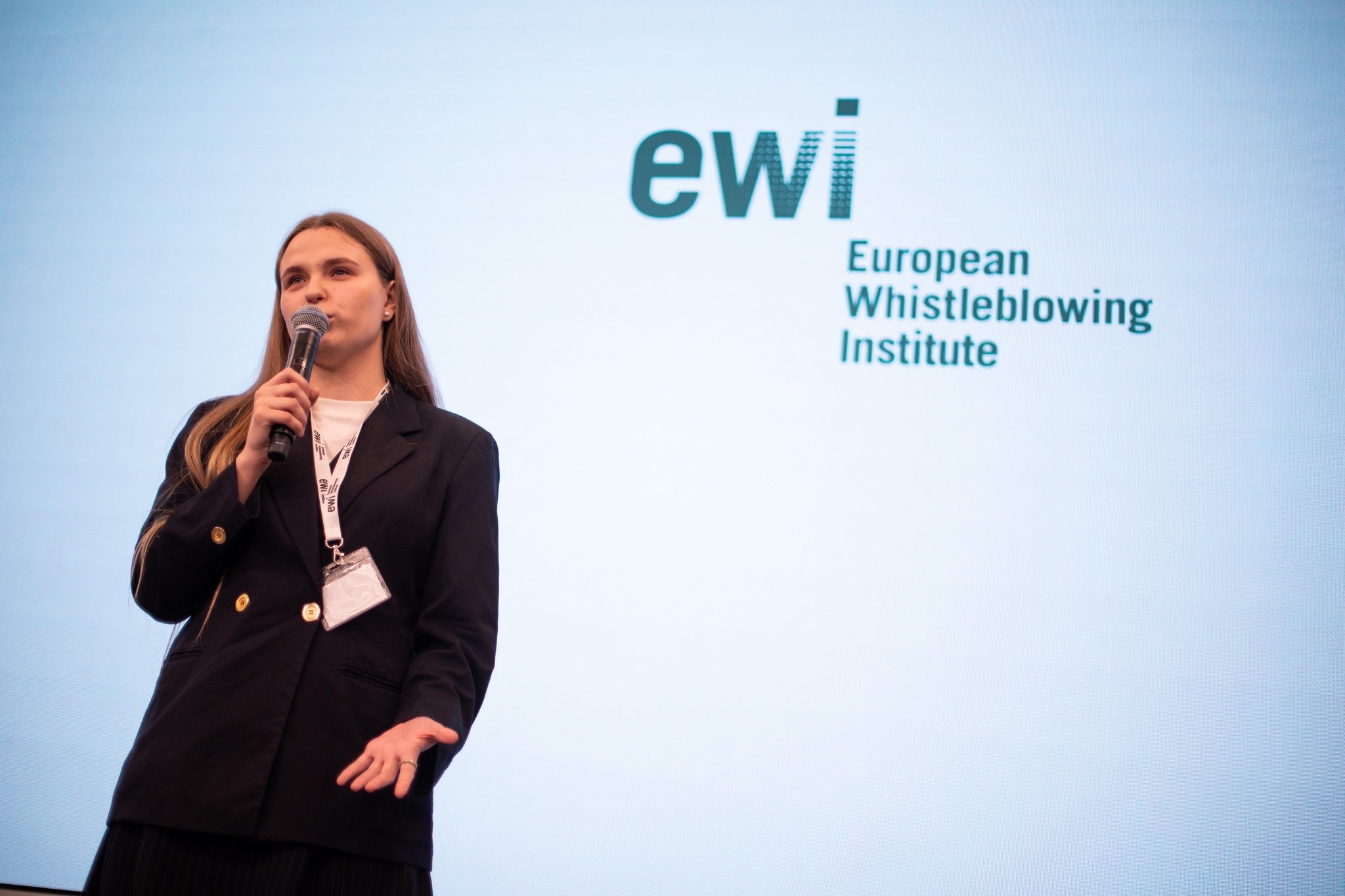
The Master’s Thesis of Vytautas Magnus University (VMU) Faculty of Law graduate Eglė Vaizgėlaitė won two awards. Last year, it was recognized in the competition for the best master’s theses by the Supreme Court of Lithuania, and this year it received the prestigious Lewis Master Thesis Award, which was presented to her in Brussels by Professor David Lewis himself.
An Award with an Important Mission
Established for the first time this year by the European Whistleblowing Institute (EWI), the award highlights outstanding academic achievements and honors D. Lewis’s pioneering contributions. Professor Lewis is the coordinator of the International Whistleblowing Research Network, a legal scholar whose work has shaped the understanding of whistleblowers, their protection, and their contribution to transparency as both a legal and moral foundation.
“When I began examining the protection of whistleblowers in the United Kingdom in the 1990s, I never dreamed of a day like this, when undergraduate and master’s students would be studying whistleblower protection law. I hope this award will encourage more people to bravely report wrongdoing. This research will be very valuable and will help improve whistleblower protection, as that is precisely what this award is about,” said scholar D. Lewis.
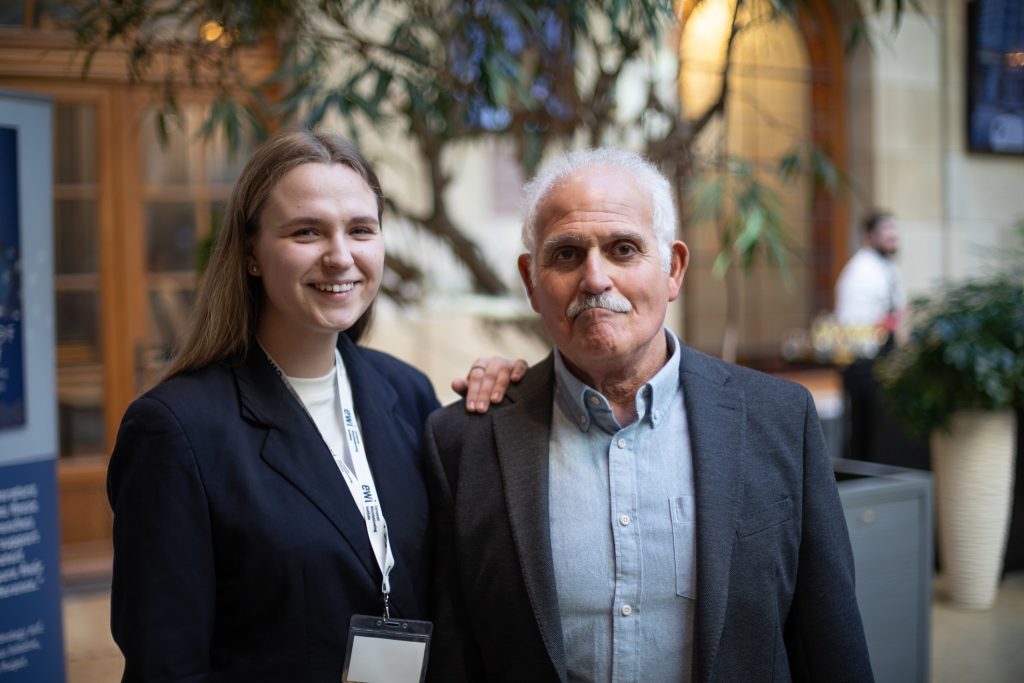
Eglė Vaizgėlaitė and David Lewis (photo of the organizers)
“This was an invaluable experience that allowed me to meet leading scholars and legal professionals in the field of whistleblower protection from all over Europe,” the awardee shared with delight.
E. Vaizgėlaitė’s thesis, titled “The Issue of Exempting Whistleblowers from Criminal Liability in Lithuanian Criminal Law,” was recognized for its originality, critical perspective, and the relevance of the chosen topic. At the Supreme Court of Lithuania’s competition for the best master’s theses held in September 2024, the VMU graduate was awarded not only for the best thesis but also for the most creative presentation. To explain the complexities of the whistleblower institution, she used chemical reagents.
The Importance of Finding Inner Motivation
“They say that law is a dry science, that there is no creativity in it. But such statements usually come from those who have never encountered law or have only done so very superficially. In reality, law is not just about rules and norms. It is the ability to analyze, to ask questions, to critically assess situations, and to seek solutions,” she said confidently.
According to her, writing a thesis may at first seem exhausting, even intimidating—long lists of sources, numerous scholarly texts, analysis of legal acts and cases, methodological requirements, and so on. But everything changes when you start to see it not as a ‘mandatory assignment,’ but as an individual research project—an opportunity to delve into what interests you, to ask questions, to build arguments. In other words—a creative process.
“When choosing a topic, I knew I wanted to write with meaning. The beginning of my thesis was also not easy (as is the case for other students)—I had to read a lot of material to identify relevant legal problems and to understand the foundations of legal regulation. But it is precisely that moment, when you finally discover a topic that truly ‘hooks’ you, that changes everything. Then, inner motivation appears,” said the VMU Faculty of Law graduate.
A Thesis—Not an Obligation, but an Opportunity
In her thesis, E. Vaizgėlaitė raised questions of human rights, loyalty to the interests of the state, and moral responsibility—issues that are especially important today not only in Lithuania but throughout the democratic world. The graduate sees the whistleblower institution as one of today’s forms of civic expression. Through her research, she provided relevant insights that could help empower Article 39-2 of the Criminal Code and understand the institution not as a Sisyphean task, but as a Promethean form of awakening the nation.
Eglė Vaizgėlaitė (photo of the organizers)
“With my example, I want to encourage students not to be afraid of their final thesis. It is not just suffering or an imposed obligation. It is an opportunity. An opportunity to search for a field of law that you like, to delve into what truly interests you. An opportunity to learn how to ask questions and find answers. An opportunity to contribute to academic discussion. And finally – an opportunity to shape yourself as a growing professional,” said the graduate.
According to her, if we view the final thesis as research, as a creative search rather than a task to “complete and forget,” then this process can be not only interesting but also inspiring. Or it may even encourage you to go further – to write academic articles, pursue doctoral studies, or build a legal career in an international context.
Erasmus+ Traineeship Competition

The competition is open for Erasmus+ students or recent graduate traineeship grants for traineeships in the EU/EEA. The application deadline is January 31, 2025.
(Application is OPEN every month!)
The placement period is from 2 to 4 months. Recent graduate traineeship must end – a year after graduation.
Note! For recent graduate traineeship applications must be submitted and students must be selected while the applicant is still a student at VMU.
You can only apply for one traineeship place – multiple mobilities are not possible.
Selection
All VMU full-time degree students who have not used more than 10 months of their Erasmus mobility (study/traineeship) period are eligible for the Erasmus grant.
Selection documents (Documents must be submitted online):
For student traineeship (traineeship during student’s year of studies):
For recent graduate traineeship (application must be submitted during the last year of studies):
The priority in the selection is given to:
- students whom traineeship is an obligatory part of their study programme;
- students who have never been Erasmus traineeship students before.
Selection criteria:
- student’s motivation;
- good knowledge of the language which will be used during the traineeship;
- student’s work, study, traineeship, participation in international/academic projects, and social activities experience in Lithuania and abroad;
- conformability between the chosen traineeship and the student’s study programme;
- study results (first-year MA students should attach a transcript of records of their BA/MA degree to the application form).
More information
Students Invited to Attend T4EU Week in France
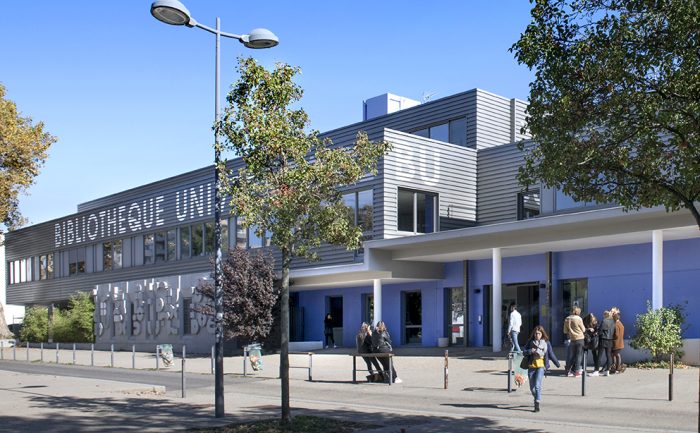
Jean Monnet University, partner of the Transform4Europe (T4EU) Alliance, invites students of VMU and other T4EU universities to take part in the T4EU Week in Saint-Etienne, France on 19-23 May. Application deadline is 16 February.
According to the organizers, T4EU Week is a unique opportunity to immerse oneself in an enriching academic and cultural experience. The program features eight diverse courses, exploring fascinating topics such as biology, law, history, architecture, linguistics, sustainable development, and ecological transformation.
Participants are requested to choose three courses they wish to attend from the following:
- Bio Design: from nature optimisation to human design & nature inspired biomimetic surfaces for biomaterials design;
- Passing Design: Facilitating Innovation Through Design;
- Ancient design, Modern ideas;
- Design: Thinking differently, designing together;
- Designs in the European Union: Legal aspects;
- Design and language: The role of words in creating forms and meanings;
- Designing Organizations to address Societal Challenges in Territories (DO-INACT);
- Design for Ecological Transformation: Laboratory for [living] Tree [as]Architecture.
Limited scholarships are available to cover travel and accommodation expenses.
As an added bonus, T4EU Week coincides with the annual Fest’U festival, promising an unforgettable cultural experience alongside the week’s academic offerings.
Program of T4EU Week
Registration
More information is provided by email at Transform4Europe@vdu.lt.
VMU Connections Will Unite Pupils, Students, and Graduates

On 8 November, Vytautas Magnus University (VMU), celebrating its 35th re-establishment anniversary this year, will host a unique event: VMU Connections, in which pupils, students, graduates, and business representatives will unite for a common goal: to meet, talk, and share knowledge, experience, and career opportunities.
This is the first time the university will host an event of this format, bringing together current and former VMU students, the university’s community, as well as future students—school pupils—in one space. Each group will be provided unique content relevant to their current stage in life. Pupils will receive guidance on finding their career path, students will be presented with initial job opportunities, and graduates will have the chance to return to the university and inspire others by sharing their experiences. For businesses, VMU Connections serves as a platform where companies and organizations can directly meet young talent, introduce their company, and connect with future professionals.
Inspiring success stories
During the event, pupils will be able to participate in the special programme Matuokis Profesiją (Try Out a Profession), where they will be able to meet with the university’s community and graduates. Former students will share their experience, speak about their career paths, and provide valuable advice on how to find a future career. Pupils will meet and hear success stories from Jonas Lekšas, Živilė Mediekšienė, Julijus Grickevičius, Vaida Matijošaitė, Vytautas Valaitis, Mantas Karanauskas, and other VMU graduates.
“I am observing the evolution of VMU and I’m fascinated by the university’s renewal and ability to keep in step with the times. As I return to VMU, I’d like to speak about the university I discovered and the legends I had heard about it. At the same time, I’d like to provide advice on how to make better use of one’s time at the university, whose impact reaches further than just the chosen profession”, Julijus Grickevičius, culture expert and communication specialist, notes.
Živilė Mediekšienė, a graduate of VMU Agriculture Academy and Marketing and Communication Project Manager at Agrokoncerns Group, has also shared her own experience: “Participation in Try Out a Profession is also a great opportunity for me to revisit memories of my study years, which I still consider one of the most beautiful stages of my life. I’d like to inspire pupils to aim for more than just the basics—because all the extra experiences and accepted challenges can pave the way for many more opportunities and help find one’s true potential”.
Jonas Lekšas, a sports commentator for TV3 Group, basketball journalist at Krepsinis.net, and VMU law graduate, remembers the anxiety about the future that he felt as a pupil: “There was a lack of information and a shortage of interesting examples around me. The main question was, “What kind of uninteresting job will I have to do to make money? I had a dream but I really didn’t think it was possible – to work in a job that I love. As it turns out, everything is possible, and it’s made easier with the right examples and information. So I’m glad that I have the opportunity to share my story and, who knows, maybe I’ll help someone start the journey toward their dream”.
Having returned to work at VMU after completing his studies here, Vytautas Valaitis, a freelance operator, producer, and video editing director, emphasizes that the university had a significant influence on his development both as a person and as a professional: “VMU provides the freedom to not limit oneself just to the subjects of the study program: you can choose additional courses, languages, or minor studies, and discover the things that interest you. It’s not just an academic space but also the place where you can experiment, participate in various communities, and fulfill yourself. This freedom allowed me to develop my activities alongside my studies, to discover important connections and even to find my future wife”.
Career opportunities for students
The Career Day, dedicated to the students, will provide the opportunity to get acquainted with representatives of over 30 companies and organizations, such as Kauno Grūdai, Rovaltra, Užimtumo Tarnyba, Hoptrans, Citco, Evolution, and others. At the career fair, students will have the chance to find out about the latest trends in the job markets, establish important connections and even attend in-person job interviews.
“The VMU Connections event is a great platform both for the students and the employers, which provides a unique opportunity to establish meaningful connections and discover future specialists”, says Daiva Ulkienė, Selection Manager at Baltec CNC Technologies. “The Career Day and fair allow us to meet with the future specialists in person, to listen to their expectations, and to introduce them to the possibilities that we offer”.
“Participation in VMU Connections is a great chance for us to meet with talented and motivated students who not only seek their first career opportunities but also wish to find employers who care about the growth and development of their employees. Our company aims to attract ambitious people who can contribute to our success and growth. Such events make it possible for us to not only introduce ourselves and our values, but also to directly communicate with future specialists, listen to their expectations, and introduce them to career opportunities in our organization. We invite students to come because this is a unique chance to meet the employers, learn about the job market trends and, possibly, discover one’s own career path”, Irena Aleksiūnienė, Human Resources Manager at Kauno Grūdai, notes.
Raimonda Liutkė, Human Resources Specialist at Hoptrans, which is another participant of the VMU Connections event, one of the key values at the company is cooperation: “The Career Day provides the opportunity to establish an open, sincere, and sustainable connection with students. We hope that this connection will combine the mutual desire to share and exchange not just experiences, knowledge, and perspectives, but also opportunities.
Festive concert
VMU graduates will not only share their experiences with the pupils but also will remember their study years and meet with their course mates and old friends during the Alumni Day. The VMU Connections event will culminate with a festive concert for the entire university community dedicated to the 35th re-establishment anniversary of VMU. The concert will feature the most popular songs of the 1990s.
Performers at the concert will include the VMU Chamber Orchestra (Chief Conductor Vytautas Lukočius), representatives of VMU Music Academy’s Jazz Department Adrijus Kudaba (guitar), Deividas Pileckas (keyboard), Julijus Sipavičius (percussion), and soloists Justinas Lapatinskas (graduate of VMU Music Academy) and Vytautė Tamutytė (student of VMU Music Academy).
The programme will include songs by bands Antis, Foje, Rondo, Poliarizuoti Stiklai, Rebelheart, and Kardiofonas, as well as the most popular compositions by performers Kastytis Kerbedis, Ovidijus Vyšniauskas, Vytautas Kernagis, and Eurika Masytė.
More information and full program: vdu.lt/jungtys
New Academic Year With VMU

On 2 September, we invite the community of Vytautas Magnus University to celebrate the beginning of the school year in Kaunas and Vilnius. Let’s celebrate science, new beginnings, and a promising time of the year and life!
In Kaunas we will start at 2:00 PM by gathering at the Monument of Vytautas the Great. Here, you’ll enjoy a memorable university welcome, followed by a procession to the Student Square. There, you’ll be invited to sway and enjoy a concert by VDU Music Academy lecturer Mantas Jankavičius.
Those who wish to attend the Holy Mass at 12:00 PM should meet at the Cathedral Basilica of St. Peter and St. Paul (Vilniaus St. 1).
In Vilnius the academic year opening celebration will begin at 10:00 AM at VDU Education Academy (T. Ševčenkos St. 31, foyer).
Please note that the event will be photographed and/or filmed, so you may appear in event photos or videos that could be published in various media outlets.
Fourth International Scientific and Practical Conference “Trends and Challenges in European and National Criminal Policy”
On 12 April 2024, for the fourth year in a row, the Mykolas Romeris University School of Law, the Institute of Law of the Lithuanian Social Science Centre and the Faculty of Law of Vytautas Magnus University jointly organised the International Scientific and Practical Conference “Trends and Challenges in European and National Criminal Policy”. The conference brought together academics and practitioners to share scientific ideas and practical insights on emerging trends and challenges in the field of criminal policy.
The conference’s engaging programme covered topics ranging from the legal regulation of drug quantity determinations (rhetorically asking “How do the scales of the Themis weigh drugs?”) to the future prospects of remote criminal proceedings in EU law.
The conference focused in particular on areas of EU criminal law such as electronic evidence and data retrieval from EU Member States. Other topics were also presented: the application of conventional criminal norms in the grey area of interpretation, the problem of distinguishing fraud from financial crimes, the assessment of the quality of indictments (based on the results of a study conducted by experts of the MRU School of Law on the assessment of the quality of the procedural activities of prosecutors’ offices), etc. Many speakers, while presenting individual topics, highlighted the problems of legal uncertainty and inconsistency in the areas of legal regulation and its application.
It is also pleasing that the conference, and its second session, was attended by German and Polish scholars from a distance, whose legal experience and views really enriched the scientific debate and allowed us to hear how different countries deal with similar problems.
“The discussions at the conference were successful and fruitful. I hope that this conference will become a meaningful platform for further development and legal progress in different areas of criminal justice,” emphasised Professor Dr Jolanta Zajančkauskienė.
The Fifth International Scientific and Practical Conference on “Trends and Challenges in European and National Criminal Policy” will already take place in 2025, in Vytautas Magnus University, Kaunas.


VMU Faculty of Law to Open Exhibitions to Mark the Baltic Way

The third exhibition at Vytautas Magnus University (VMU) Faculty of Law, dedicated to the memory of the Baltic Way – an important historical event of the unity of nations and the path to democracy is open March 4-31, 2024. The exhibition, is organized implementing the EU project „Remember Bacha“ (no.101089965, CERV-2022-CITIZENS-REM, European Remembrance,) which seeks to scientifically analyze the work of outstanding citizens in the fight against totalitarianism, as an example of Europeanism and intensive work for a better society, a memory of the fight for freedom and a balanced society.
The exhibition will be open at VMU Faculty of Law (Jonavos g. 66, Kaunas, on the first floor corridor). This exhibition is related to the important event of Lithuanian history and its democracy- Lithuanian Independence Restoration Day. The exhibitions will be open March 4-31, 2024.

A total of 58 photographs capturing selected moments from the three Baltic states (Lithuania, Latvia and Estonia) will be shown to the public during the exhibitions.
In addition, to commemorate this important historical event, we invite to watch a short film created by the project promoters.
The exhibition is open and free of charge to everyone and open during the weekdays and Saturdays from 8:00 a.m. to 9:00 p.m.
Call for papers – international scientific-practical student conference “Contemporary law trends and perspectives”
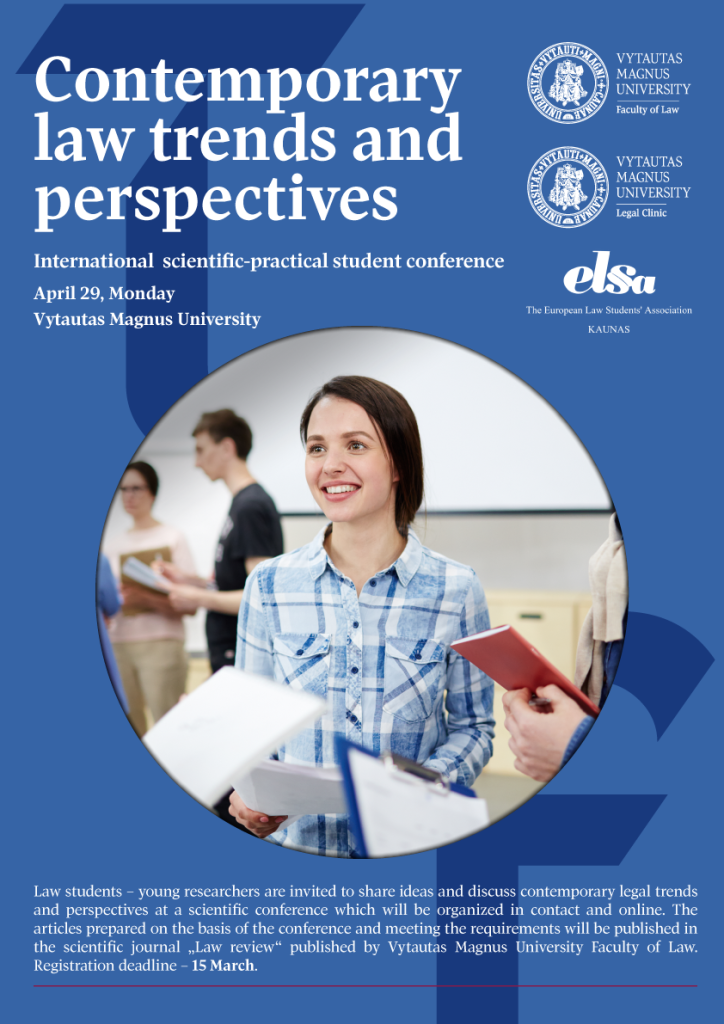
Registration form
Registration for the Freedom to Create 2024 Conference for Students

VMU invites you to participate in a student conference “Freedom to Create” which will be held on May 3rd, 2024. The conference is dedicated to to the anniversary of the re-establishment of Vytautas Magnus University and to the concept of artes liberales. The conference will take place at the VMU Multifunctional Science and Studies Centre (V. Putvinskio g. 23, Kaunas).
Undergraduate, graduate and exchange students of all fields of study are invited to deliver their presentations, present their creative work and/or moderate one of the conference parallel sessions. Presentations can be made individually or in a group with other students.
Registration is open until 22 March. Registration form.
“This year, as the re-established VMU marks its 35th anniversary, we dedicate the conference to the artes liberales study model, which was integrated into Lithuanian higher education with the re-establishment of VMU, and we invite students to discuss how VMU’s artes liberales model, through individualised and interdisciplinary study choices, liberates students’ creativity and innovation, fosters their leadership and entrepreneurship, develops empathy, responsibility, and intercultural awareness, provides them with the competencies to think broadly, and assists in developing an idea from inception to a successful outcome,” says Assoc. Prof. Vilma Bijeikienė, Vice-Rector for Communication at VMU.
The Topics of the Conference:
- University as a Space for Creation and Art
- Possibilities and Limits of Freedom
- Creativity and Technology
- Innovative Solutions for Business and Social Challenges
- Nature in the Hands of a Scientist
- Languages, Cultural Diversity, and Human Values
- Sustainable Development in Education
- Sports and Wellness
- Political Contexts and Media Space
Keywords of the conference: Artes Liberales, Interdisciplinarity, Creativity, Sustainable Development, Innovation, Multilingualism, Artificial Intelligence (AI)
Types of Presentations and Time:
- Oral presentation (should not exceed 15 min.)
- Poster presentation
- Presentation of creative work (a performance with a presentation not exceeding 15 min., or an exhibition)
Conference Languages: Lithuanian, English and other languages taught at the university.
A presentation summary (200 to 250 words) in Lithuanian or English is required on the registration form.
Authors of selected presentations will be notified by 10 April. Conference programme will be announced by 22 April.
The papers will be evaluated by the Conference Scientific Committee.
More information